
How AI-Powered Sourcing and Design Transforms Apparel
Time to read: 4 minutes
We sometimes use affiliate links (at no extra cost to you)
if we have wholehearted recommendations we know you'll love.
We sometimes use affiliate links (at no extra cost to you)
if we have wholehearted recommendations we know you'll love.
In the dynamic world of fashion manufacturing, the product development workflow has undergone a remarkable transformation. Gone are the days when sourcing meant relying purely on manual processes, guesswork, and endless physical sampling. Today, AI-powered design and sourcing solutions are fundamentally revolutionizing how clothing brands connect with suppliers, build their technical documentation, and manage their supply chains.
Integrating AI into your product development workflow allows brands to transition seamlessly from initial CAD sketches to factory-ready tech packs and verified fabric suppliers in a fraction of the time. But let’s be clear: AI is not a magic wand that replaces technical expertise. It is a powerful operational multiplier.
Here is exactly how AI-powered tools are streamlining the apparel manufacturing process—and why adopting them is the key to protecting your margins.

Photo by Museums of History New South Wales on Unsplash
From Analog Headaches to Digital Sourcing
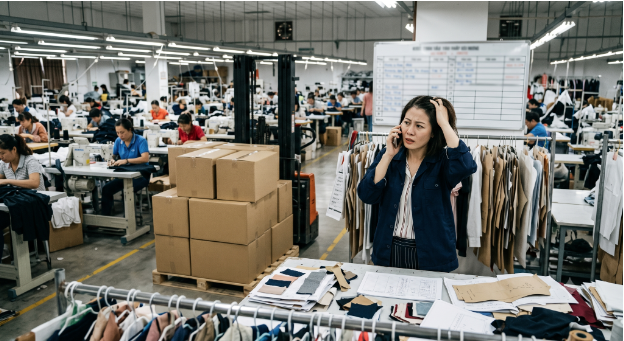
Traditionally, sourcing and product development were incredibly manual tasks. Founders spent months attending international trade shows, building personal relationships, and physically mailing tech packs and fabric swatches across the world. While these analog methods fostered trust, they were highly time-consuming, expensive, and limited in scope.
The dawn of the internet introduced foundational tools like ERPs (Enterprise Resource Planning), which allowed brands to manage inventory, purchase orders, and invoices electronically. This digital shift led to fewer errors and faster communication.
However, today, artificial intelligence is at the forefront of sourcing innovation. Platforms utilizing AI can now automate supplier searches, match businesses with ideal manufacturing facilities, and streamline supplier management. This technology not only enhances day-to-day efficiency but also provides valuable insights into market trends and supplier performance so you can gain total visibility over your supply chain.

The AI-Powered Product Development Workflow
To understand the business impact of these tools, we have to look at how AI physically changes the steps of apparel production. Here is how the modern, AI-enhanced workflow operates:
1. Supercharged Ideation and Virtual Prototyping
The process no longer begins with a blank page. Designers can now use descriptive text prompts, existing sketches, or reference images to generate high-fidelity design concepts in minutes. AI image generators allow teams to rapidly explore silhouettes, colors, and design variations before a single piece of fabric is cut.
Once a concept is locked in, advanced AI algorithms can convert these 2D generations into workable 3D patterns draped onto customizable virtual avatars. This allows technical designers to review tension maps, assess how a garment hangs, and make real-time pattern adjustments virtually. This "see it before you sew it" approach drastically reduces the need for expensive, early-stage physical samples.
2. Automated Tech Pack Generation
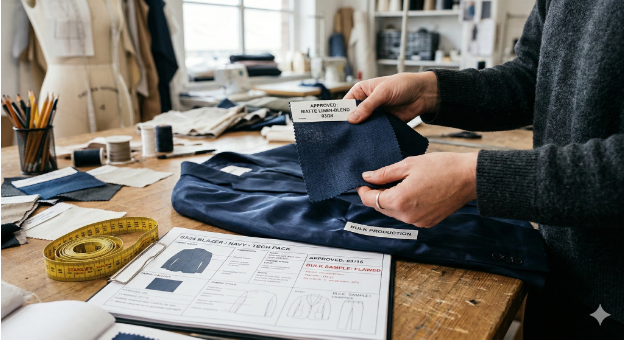
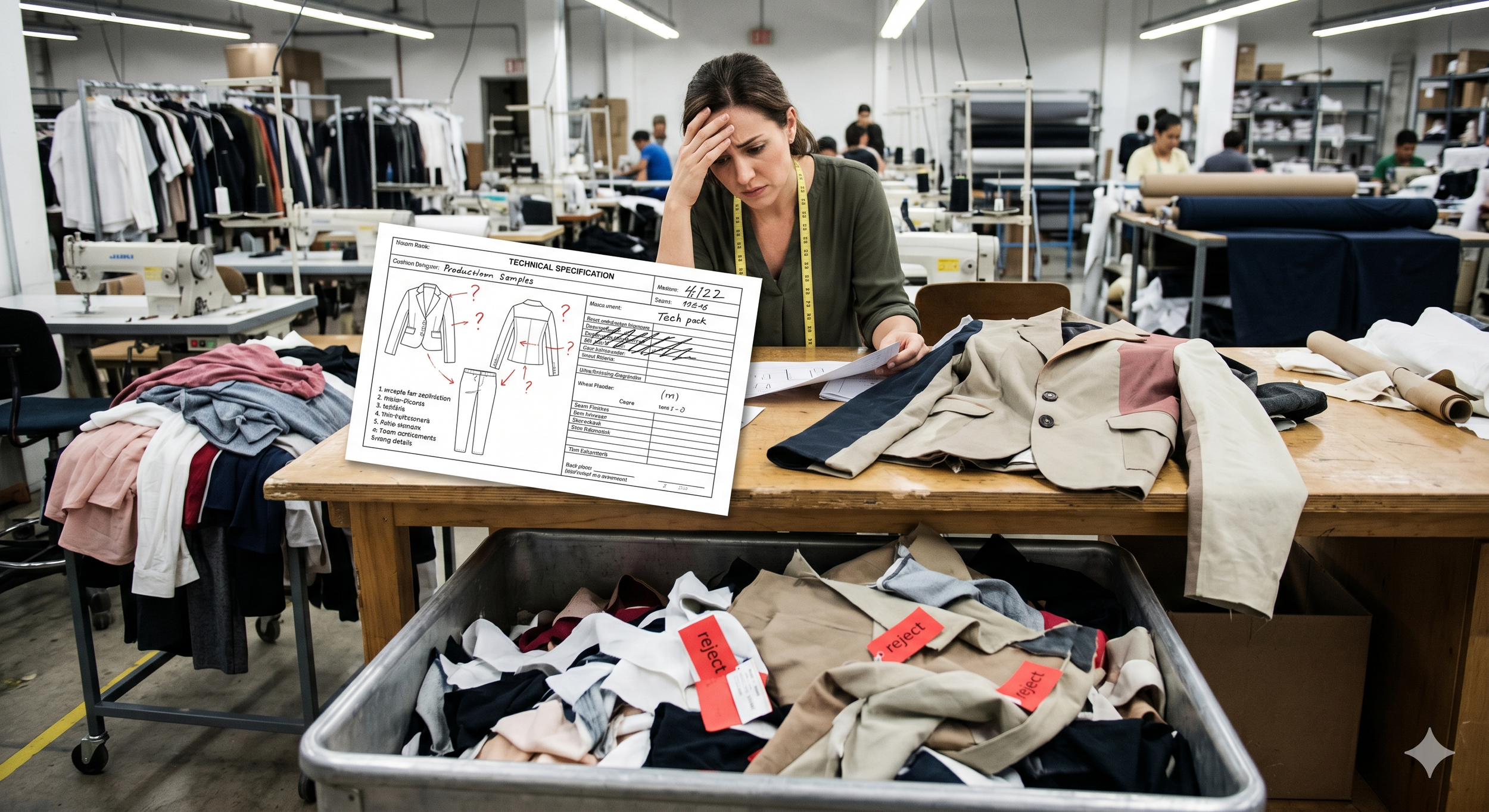
Sending vague design instructions to your manufacturer is an incredibly expensive mistake. Traditionally, assembling a dense, detailed tech pack could take an entire day per style. Now, AI systems can pull data directly from digital 3D prototypes to help auto-populate comprehensive tech packs.
These systems extract point-to-point measurements, generate technical flats from multiple angles, and compile a detailed Bill of Materials (BOM) listing every component from the main fabric to the specific thread type. By automating the heavy lifting of tech pack creation, brands can ensure their specifications are perfectly uniform, reducing the chance of costly factory miscommunications.
3. Smart Fabric Innovation and Digital Sourcing
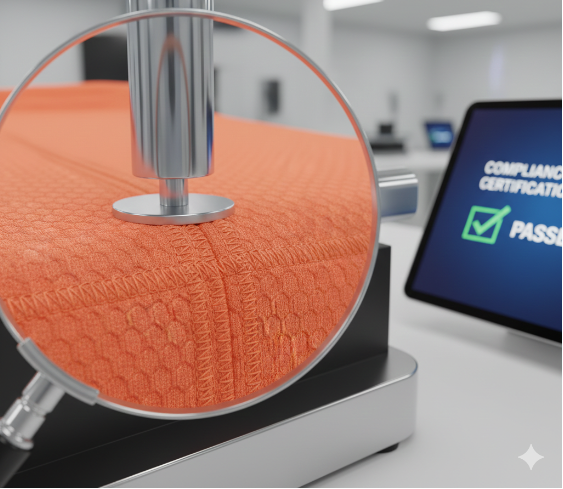
Sourcing the right material is often the hardest part of building a collection. AI accelerates this by simulating fiber behavior, predicting how a fabric will perform, and offering data-driven material recommendations. Modern platforms use "digital twins" of real-world materials—complete with data on weight, stretch, and stiffness—so designers can test countless fabric combinations virtually.
When it is time to buy, AI-powered sourcing tools match your specific BOM requirements to verified global suppliers. Instead of manually cross-referencing capabilities, the AI filters for the best cost, location, and technical match, pulling personalized search results directly to your dashboard.
Why AI Sourcing Matters for Your Bottom Line
For growing businesses in the clothing and textile sectors, AI-powered sourcing is no longer just a trendy buzzword—it is a mandatory line of defense for your profitability.
Exponential Efficiency
Automated processes drastically reduce the time spent on supplier discovery, research, and cross-referencing. Using AI search filters delivers highly personalized supplier results on a single page from just one written query. What used to take weeks of vetting can now be accomplished in an afternoon.
Direct Cost Savings
AI identifies the most cost-appropriate sourcing options across the globe, helping businesses stay strictly on budget. By comparing landed cost savings in line with other critical search factors (like minimum order quantities and lead times), founders get a holistic, data-driven look at their product sourcing.
Frictionless Scalability
As your clothing brand grows, AI systems easily adapt to increased sourcing demands without requiring a massive jump in manual labor. Setting up new product lines or initiating new supplier searches can be executed in minutes.
Better Factory Communication
AI allows you to contact multiple suppliers simultaneously to make initial inquiries. You can use these tools to securely send relevant product requirements, completed tech packs, and manufacturing terms without manually starting dozens of separate email threads.
Conclusion
Embracing AI in sourcing is not just a trend; it is a strategic move to stay competitive in today's fast-paced market. By leveraging these advanced tools alongside ironclad technical documentation, apparel brands can optimize their supply chains, aggressively reduce costs, and focus on what they do best—creating exceptional products.
Just like all complex tools, it might take a minute to learn how best to use AI platforms, but the time investment is necessary to stay ahead of the curve. As the veterans in procurement say, the savings are in the sourcing!
Ready to bulletproof your product development workflow? Join our email list for insider updates on manufacturing textile products, or book a call with the Tech Packs Co team today to get your technical documentation sorted.





Author Bio
Tech Packs Co founder Belinda is a technical fashion designer from London, now based in Los Angeles. Belinda had her first job in fashion at the age of 15, fixing swatch cards together. Since then, Belinda has been designing & creating tech packs for more than a decade... for household name brands and independent designers alike.