
Build a Compliance-Ready Sportswear Development Process
Time to read: 3 minutes
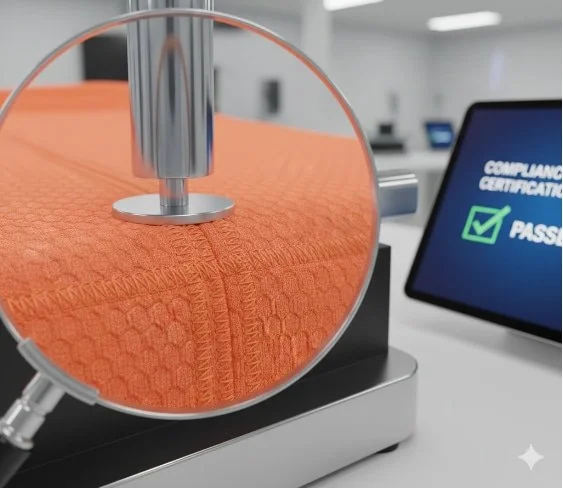
Compliance isn’t something you “check” before production. It’s something you design into the product from day one.
If you treat sportswear compliance as a last-minute review, you’ll face the following:
Costly relabeling
Delayed shipments
Failed testing
Factory confusion
Risk of recalls
Here’s the framework for building a proactive strategy into your development process.
Step 1: Define Sportswear Compliance Requirements at the Concept Stage
Before the design is finalized, ask:
Where will this product be sold?
Who is the end user? (Adults? Kids?)
Does it include electronics?
Will sustainability claims be made?
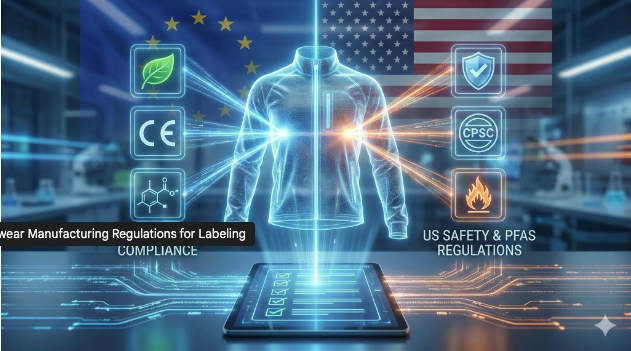
True sportswear compliance depends heavily on geography and product category.
Step 2: Lock Sportswear Compliance Into Your BOM
Your Bill of Materials (BOM) is where compliance becomes real. Document:
Exact fiber content
Trim materials
Coatings and finishes
Dye processes
Chemical treatments
If it’s not in the BOM, it’s not controlled.
Step 3: Build Traceability Early
Traceability is no longer optional—especially for EU markets. You should know your
Fabric mill
Trim supplier
Dye house
Country of origin
Treatment processes
This level of tracking becomes critical for REACH, ESPR, and Digital Product Passport sportswear compliance.
Step 4: Clarify Labeling & Documentation in Your Tech Pack
Your tech pack should specify:
Fiber composition format
Country of origin requirements
Care label language
Placement and size of labels
Warning labels (if applicable)
Most labeling issues start because basic sportswear compliance details weren’t documented clearly.
Step 5: Plan Sportswear Compliance Testing Before Production
Testing should be built into your timeline, not added reactively. Examples:
Wash durability
Colorfastness
Chemical testing
Trim strength
Waiting until bulk production increases risk and cost.
Why Tech Packs Come First
Most sportswear compliance problems don’t start at the factory. They start with unclear product development inputs. A production-ready tech pack helps you:
Define materials precisely
Reduce supplier guesswork
Improve documentation
Support traceability
Flag compliance risks early
AI tools can assist, but they cannot replace a structured development foundation.
Mastering sportswear compliance is no longer an isolated department task—it is a fundamental pillar of modern product development. The apparel brands that scale successfully are the ones that make compliance a repeatable, highly documented process built directly into their everyday systems. That transformation begins with absolute clarity, rigorous documentation, and a comprehensive tech pack.
If you need support engineering tech packs that are truly built for real-world production while keeping your team perfectly aligned on materials, labeling, and manufacturing requirements, Tech Packs Co can step in to manage this process through our product development retainers.
Book a consultation with us and develop with confidence.





Author Bio
Tech Packs Co founder Belinda is a technical fashion designer from London, now based in Los Angeles. Belinda had her first job in fashion at the age of 15, fixing swatch cards together. Since then, Belinda has been designing & creating tech packs for more than a decade... for household name brands and independent designers alike.