
Why Your Clothing Samples Keep Going Wrong (And Fixes)
Time to read: 6 minutes
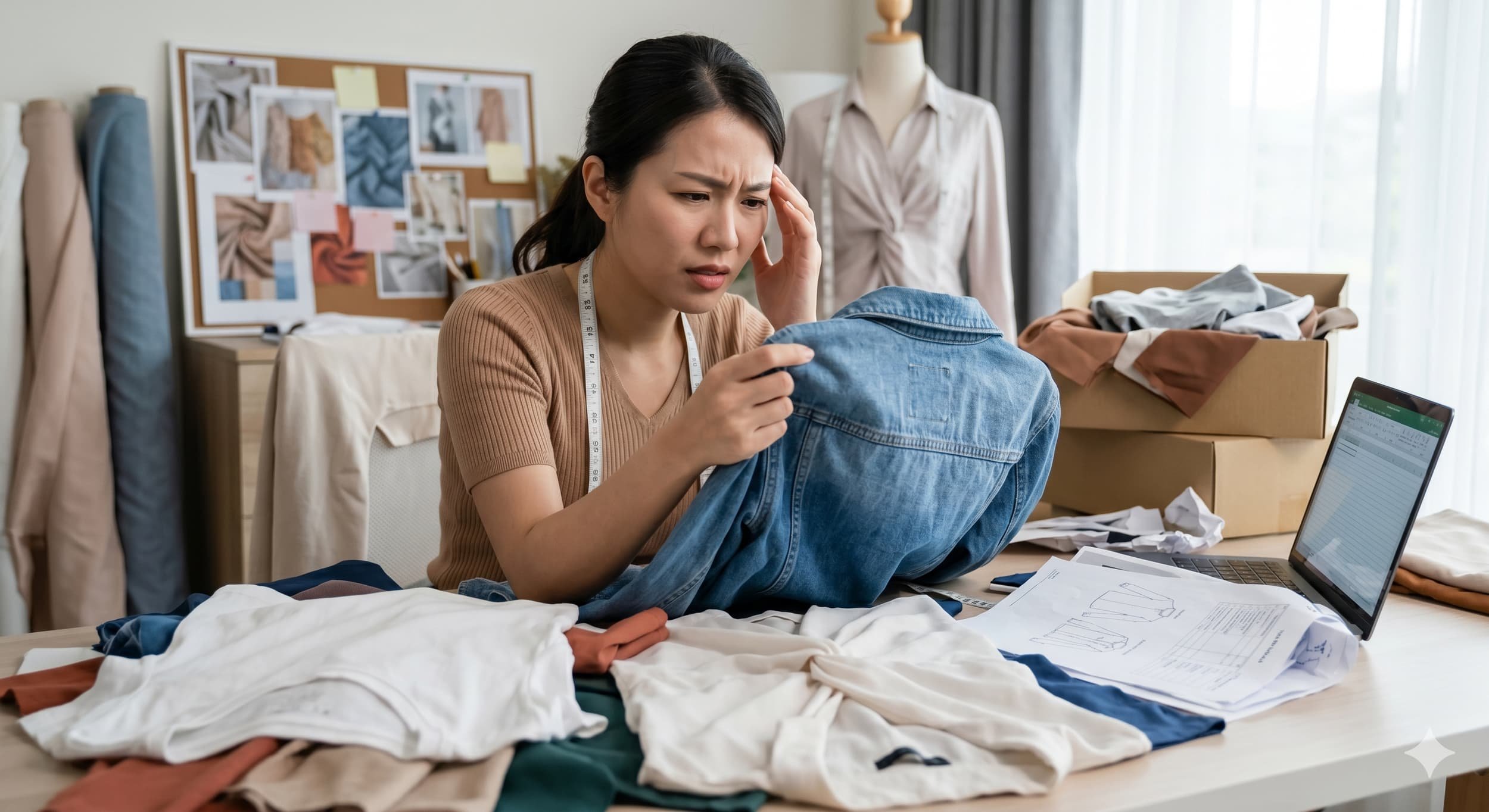
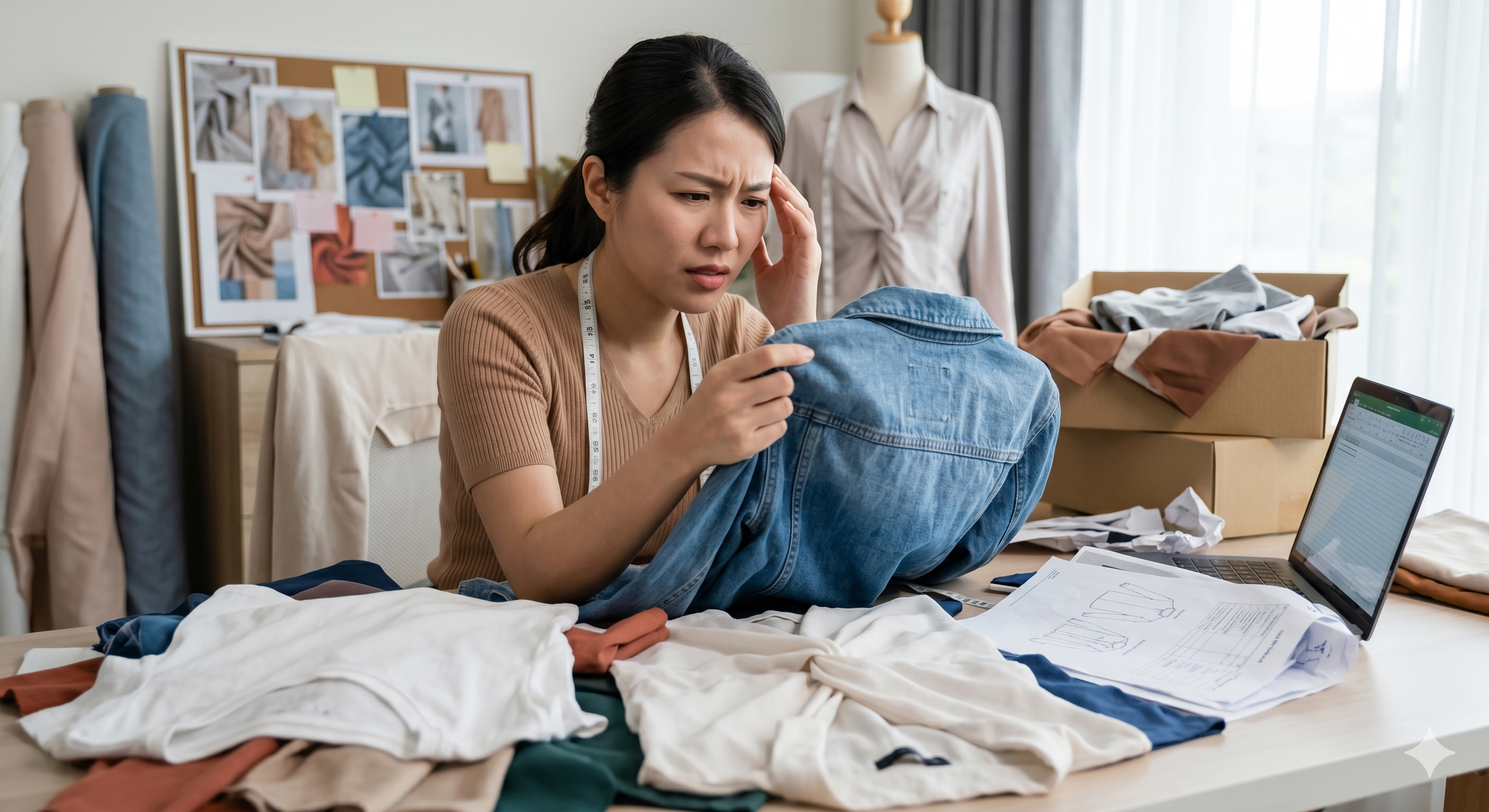
You’ve waited four weeks and paid three times the standard production cost for your first prototype. You finally cut open the DHL package and pull out the garment, and your heart sinks. The proportions are off, the fabric drapes weirdly, and the zipper is the wrong color. It looks absolutely nothing like the vision in your head.
If you are a fashion founder, this scenario is painfully familiar. Most brands budget for one or two sample rounds but end up paying for four or five. Not only does this drain your startup capital, but it also pushes your launch date back by months.
In this article, we are going to look at exactly why your prototypes keep coming back wrong, the most common clothing sample mistakes, why it’s often not the factory’s fault, and the exact steps you need to take to get your prototypes right the first time.
The Real Reason Behind Clothing Sample Mistakes
When a sample comes back completely wrong, the natural instinct is to blame the manufacturer. It’s easy to assume they are cutting corners or simply lack the skill to execute your vision.
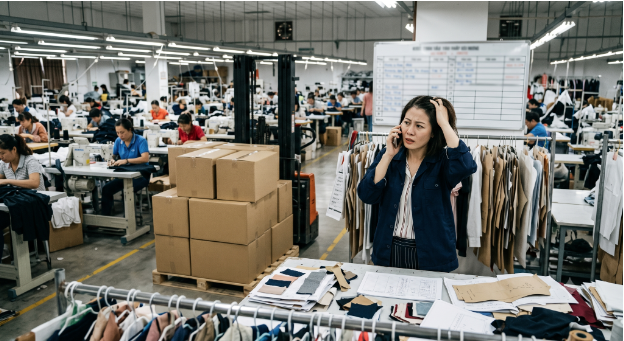
However, the hard truth of apparel manufacturing is this: factories do exactly what you tell them to do. If your instructions are vague, they do not stop the production line to ask you a dozen clarifying questions—they simply guess. And when a factory has to guess, they will default to whatever construction method is simplest or most efficient, using whatever spare materials are on hand.
If your prototypes consistently look like a Frankenstein version of your design, it usually boils down to a lack of preparation and a few critical clothing sample mistakes on the brand's side:
You provided inspiration, not details: Sending a Pinterest board and a basic flat sketch is not enough to build a technical garment.
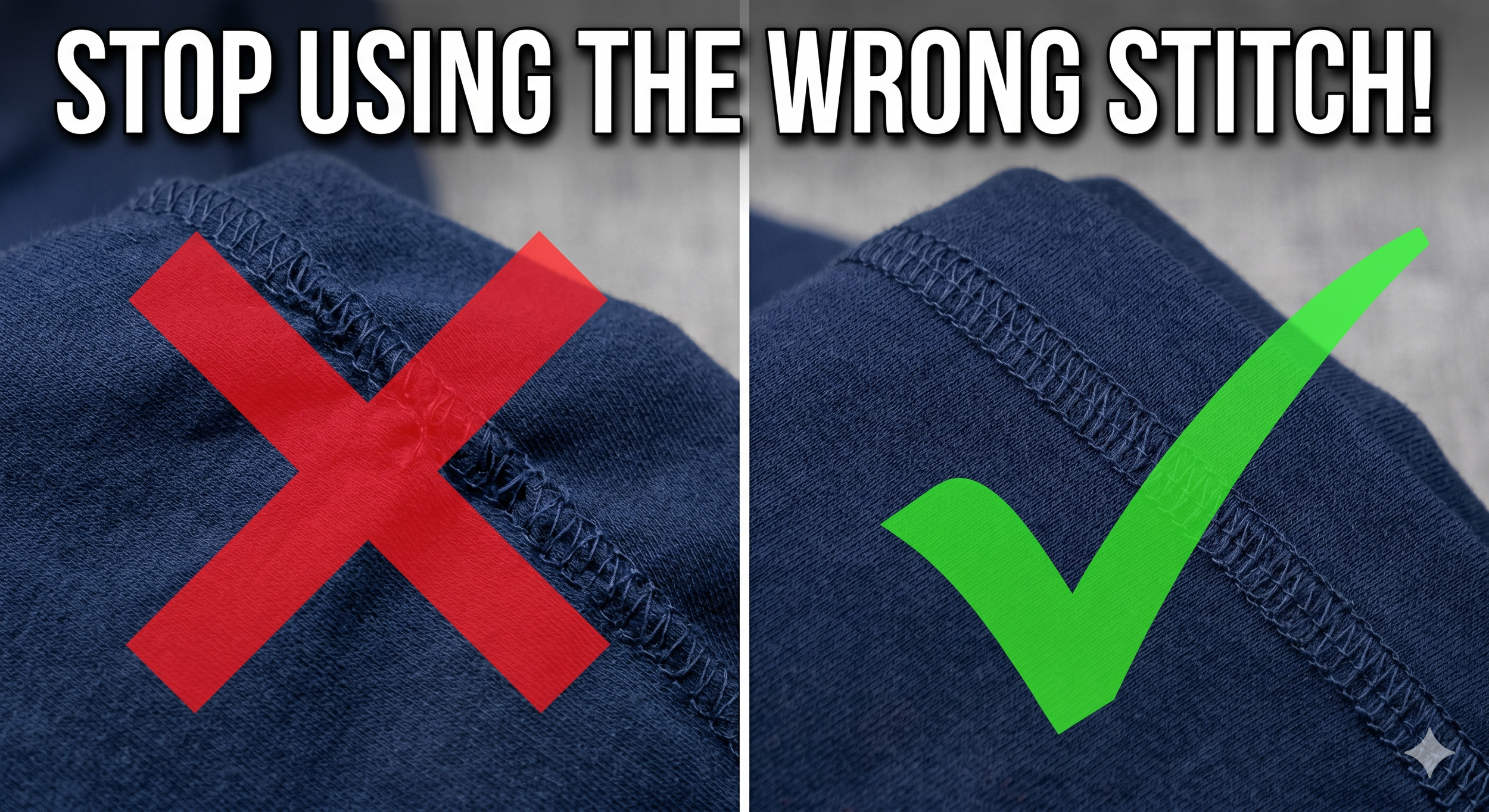
You left construction up to the factory: Did you specify a French seam or a basic overlock? If you didn’t tell them, they picked the cheapest option.
Your sizing was subjective: Asking for a "medium, relaxed fit" means nothing in manufacturing. Measurements must be mathematically precise.
Beware the "Guesswork Tax"
Every time you leave a detail out of your development package, you are paying a "guesswork tax." You are essentially paying the factory a premium to test out a physical concept that you hadn't fully resolved on paper yet. To stop paying this tax, you have to eliminate the guesswork and avoid standard clothing sample mistakes.
The Top 3 Clothing Sample Mistakes Derailing Your Prototyping Process
To get your samples down from four or five agonizing rounds to just one or two, you need to stop making these three incredibly common product development errors:
1. Relying on Incomplete Tech Packs
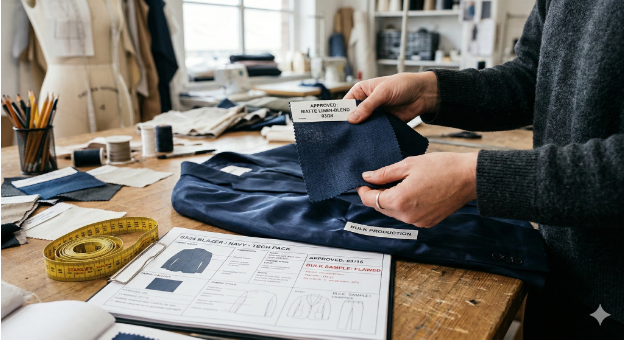
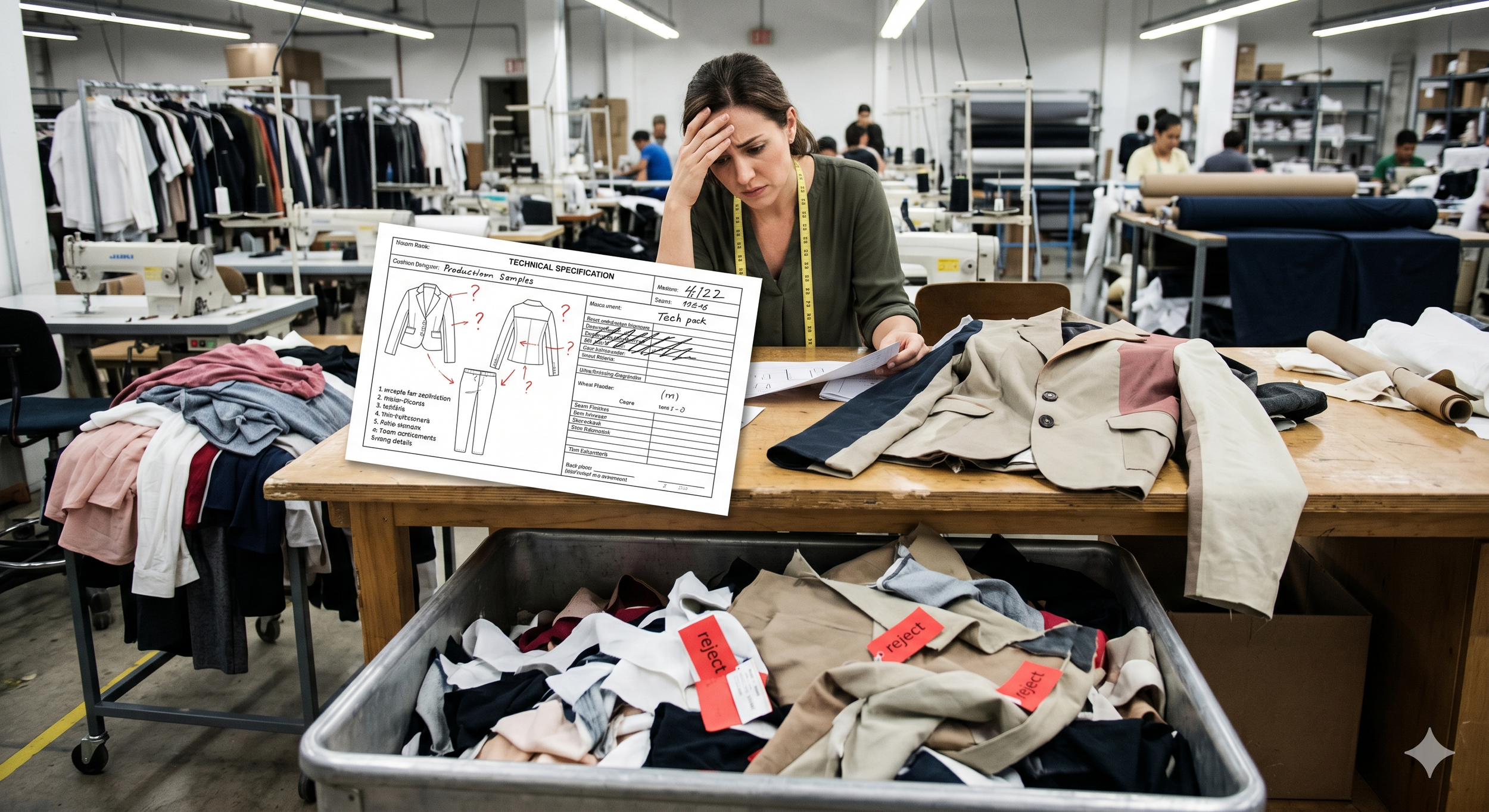
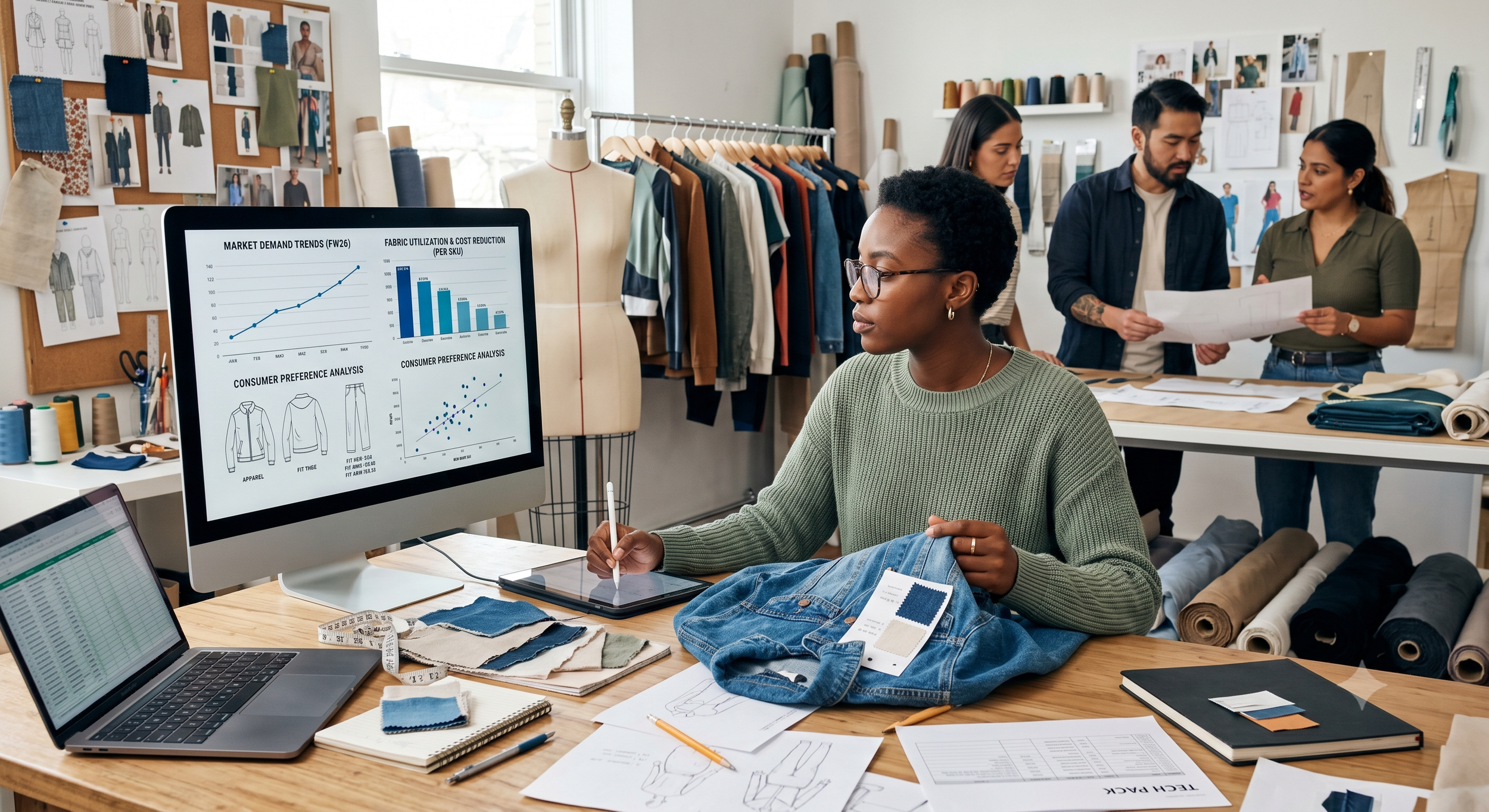
A tech pack is the blueprint for your clothing design. If your tech pack is missing a thorough Bill of Materials (BOM), grading rules, specific stitch callouts, or Point of Measure (POM) diagrams, your factory is flying blind. A professional, production-ready tech pack is the single greatest defense you have against failed samples and expensive clothing sample mistakes.
2. Changing the Design Mid-Stream
A prototype is meant to test the physical execution of a specific, finalized design. If you get your first sample back and immediately decide to change the silhouette, swap the fabric entirely, or add a new functional requirement, you aren't refining a sample—you are starting a brand-new garment in development. Lock down your core design before requesting a sample to prevent one of the most frustrating clothing sample mistakes.
3. Choosing the Wrong Fabric Before Sampling
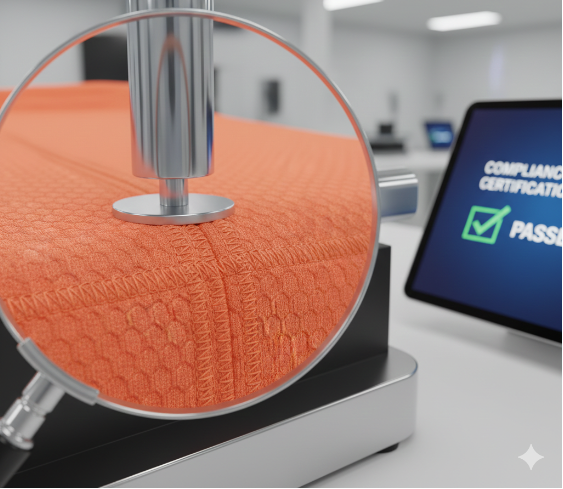
Selecting your fabric is not an afterthought—it is the foundation of your entire garment. The weight, drape, and stretch of your chosen material will dictate how the factory cuts the pattern and sews the seams. If you rush this step and have your first sample made in a "placeholder" fabric, the fit and construction will be completely off when you finally switch to the real material. To avoid wasting time and money on useless samples, you must source and finalize your exact production fabric before requesting your first prototype.
Conclusion
Endless sample rounds are not a required rite of passage for starting a clothing brand; they are a symptom of a broken product development process. By taking control of your design, providing crystal-clear specifications to your factories, and standardizing your fit testing, you can stop bleeding cash and get your collection to market months faster.
How many sample rounds did your last collection take? If it was more than two, it’s time to audit your process.
Are poor instructions costing you thousands in wasted sample rounds and international shipping fees? At Tech Packs Co, we build comprehensive, production-ready tech packs that eliminate the guesswork, prevent costly clothing sample mistakes, protect your margins, and get your samples right the first time.
Book a call with our team today to get your collection successfully prepped and spec-ed for manufacturing.




Author Bio
Tech Packs Co founder Belinda is a technical fashion designer from London, now based in Los Angeles. Belinda had her first job in fashion at the age of 15, fixing swatch cards together. Since then, Belinda has been designing & creating tech packs for more than a decade... for household name brands and independent designers alike.