
The True Cost of Clothing Samples (And How to Reduce It)
Time to read: 7 minutes
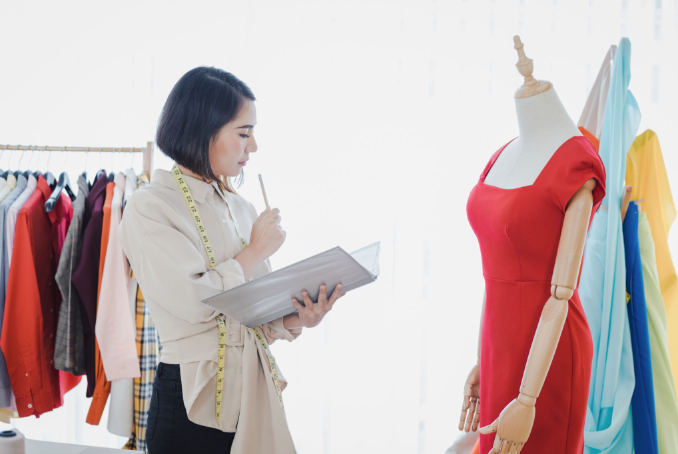
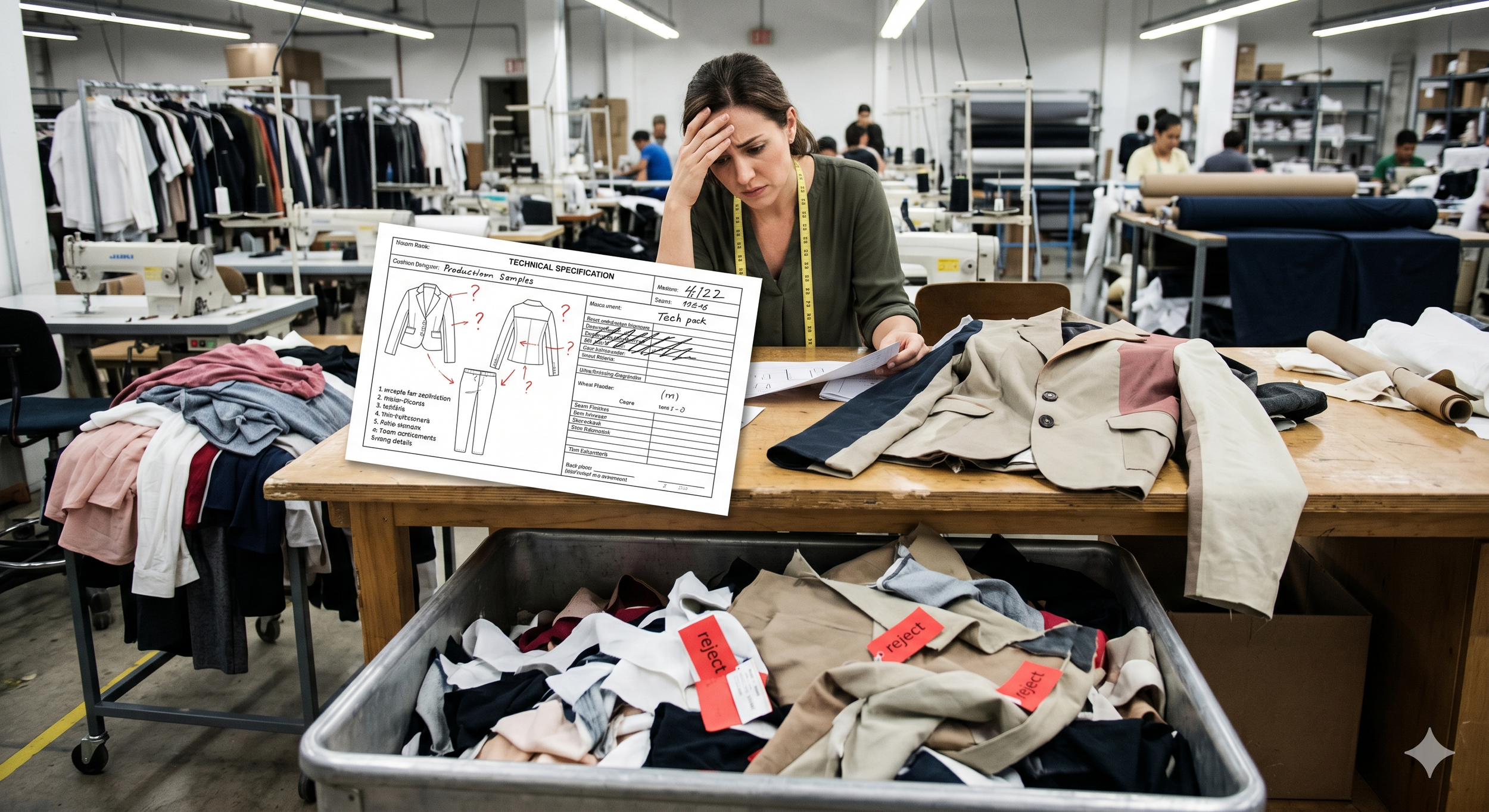
You’ve waited four weeks and paid three times the standard production price for your first prototype. You finally cut open the DHL package and pull out the garment, and your heart sinks. The proportions are off, the fabric drapes weirdly, and the zipper is the wrong color. It looks absolutely nothing like the vision in your head—because without exact technical instructions, the factory had to guess what you meant across several different details.
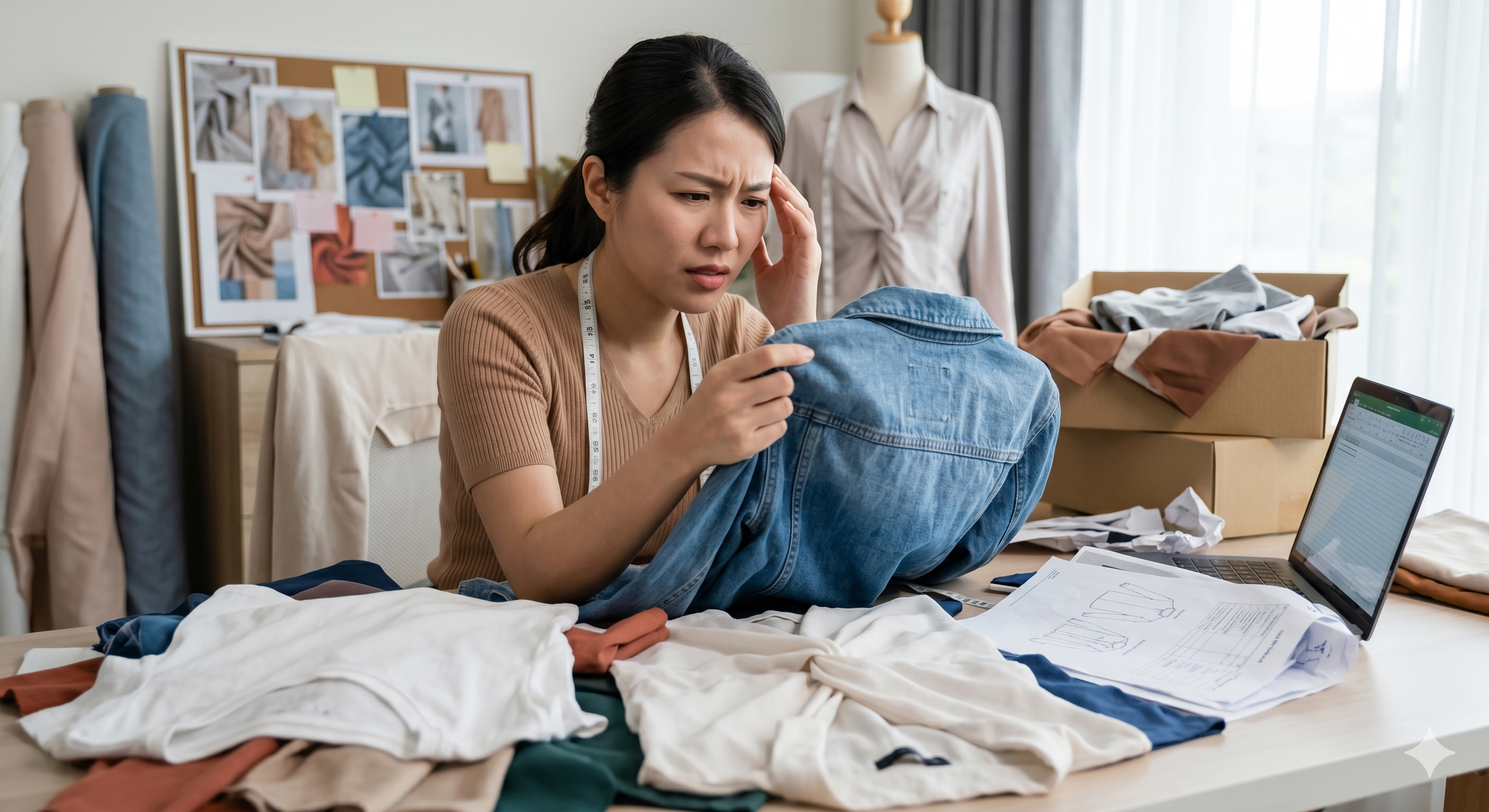
If you are a fashion founder, this scenario is painfully familiar. Most brands budget for one or two rounds, underestimating the true cost of clothing samples, and end up paying for four or five just to fix easily avoidable miscommunications. Not only does this drain your startup capital before you even have a product to sell, but it also pushes your launch date back by months.
In this article, we are going to break down your prototype budget and how to uncover the unplanned costs draining your cash flow. And show you exactly how to reduce your apparel sampling expenses so you can get your collection to market profitably.
The Anatomy of a Sample Invoice: Why the Cost of Clothing Samples is High
When founders see a factory invoice charging $150 for a single hoodie that will eventually cost $13 in bulk production, they often assume the factory is ripping them off.
In reality, charging 2x to 5x the bulk price to cover the initial cost of clothing samples is the industry standard. Factories are set up for mass production, not one-off custom tailoring. When they make a single sample, they have to:
Draft individual patterns: Before a sample can be cut, a patternmaker has to draft the initial base size from scratch.
Sourcing: Have a merchandiser work closely with you to source (and sometimes even design) all the parts that make your product
Pay premiums for sample yardage: Buying three yards of fabric for a prototype costs significantly more per yard than buying 3,000 yards on wholesale rolls.
Create custom CAD files or graphics, or edit the ones you’ve sent them
Color matching: carefully set up dye formulations to match the color swatches you’ve sent
The Hidden Cost of Clothing Samples You Aren’t Tracking
The invoice from the factory is only part of the equation. The true cost of clothing samples often hides in the logistics and the timeline:
International Courier Fees: Here in the US, shipping a physical sample via DHL or FedEx from overseas usually costs $50 to $100+ per package. If you do four rounds of samples, you’ve spent $400 just on shipping a single style.
Opportunity Cost (Time): Every failed sample delays your production by three to six weeks. Missed seasonal launch windows equal lost revenue and dead stock.
The Emotional Toll: Endless back-and-forth negotiations lead to founder burnout and strained relationships with your manufacturing partners.
Why You’re Paying for 4 Rounds of Samples (Instead of 2)
If your prototypes consistently look like a Frankenstein version of your design, it is rarely the factory's fault. It usually boils down to a lack of preparation before the factory ever threaded a needle.
Here is why your prototypes keep failing, unnecessarily driving up the cost of clothing samples:
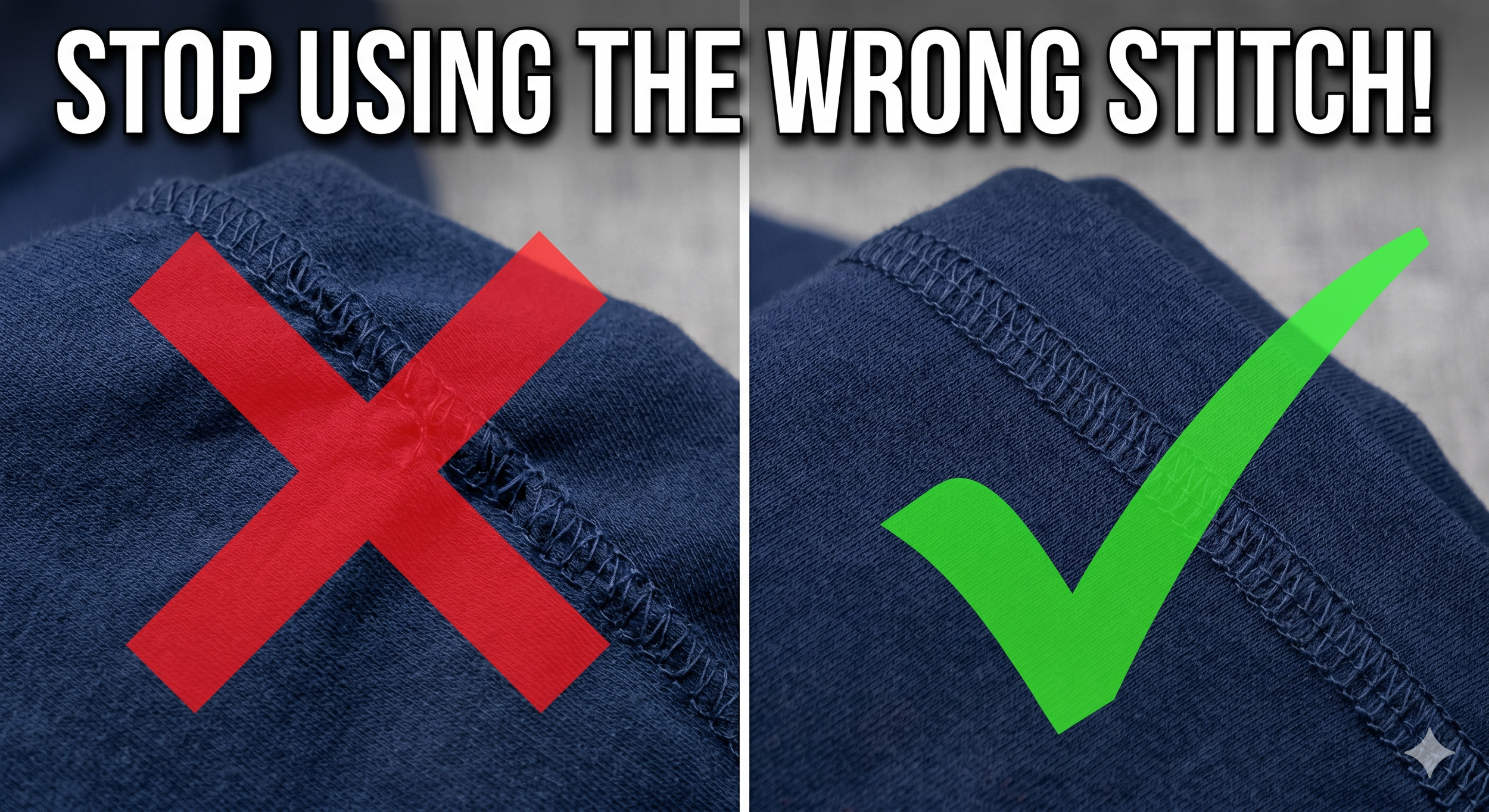
Relying on Incomplete Tech Packs: Leaving construction details, stitch types, or tolerances up to the factory’s imagination means they have to guess. They will guess whatever is cheapest and fastest.
"Frankenstein" Design Changes: A prototype is meant to test the execution of a specific design. If you get the first sample back and decide to change the silhouette, swap the fabric entirely, and change the pocket placement, you aren't refining a sample—you are starting a brand-new development process.
Skipping the Fitting: Not fitting a garment leads to highly subjective, inconsistent sizing feedback that confuses the factory.
How to Drastically Reduce the Cost of Clothing Samples
If you want to lower the cost of clothing samples, getting your prototypes right in one or two rounds isn't about luck; it is about front-loading your preparation. Here is how to stop the bleeding and protect your budget:
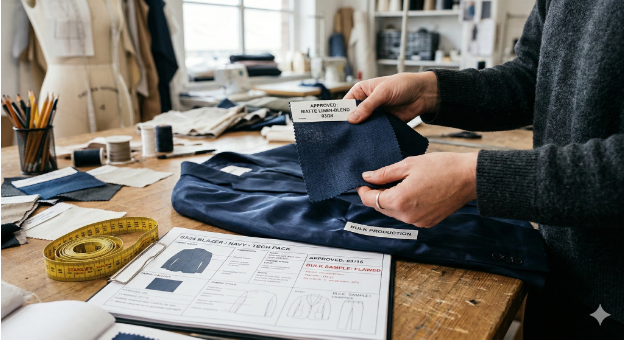
Nail the Tech Pack Before You Start: A professional tech pack is the single greatest defense you have against failed samples. The cheapest sample is the one you never have to make twice. Front-loading your development process with airtight technical instructions is the ultimate way to protect your margins.
Source Fabric First, Design Second: Never design a garment around a fabric you haven't actually chosen. Ensure you have the exact (or highly similar) fabric in hand before requesting a prototype so the drape and shrinkage are accurate from round one.
Consolidate Your Shipping: If you are developing a five-piece collection, ask the factory to hold the completed samples and ship them in one box. This cuts your courier fees by 80%.
Standardize Your Feedback: Never send feedback in five separate emails or a frantic WhatsApp voice note. Use a structured comment sheet with updated measurement charts and visual callouts so the factory knows exactly what to revise.
Conclusion
Endless sampling rounds are not a required rite of passage for starting a clothing brand; they are a symptom of a broken product development process. While you cannot avoid the baseline expense of making a prototype, you can completely control how many times you have to pay for it. By taking ownership of your tech packs, sourcing smart, and providing professional fit feedback, you can slash the overall cost of clothing samples and launch your brand months faster.
How many sample rounds did your last collection take? If you are making simple garments and still paying for more than two, it's time to fix your tech packs. At Tech Packs Co, we build comprehensive, production-ready tech packs that eliminate the guesswork, protect your margins, and get your garments right the first time.
Book a call with our team today to streamline your product development.

Author Bio
Tech Packs Co founder Belinda is a technical fashion designer from London, now based in Los Angeles. Belinda had her first job in fashion at the age of 15, fixing swatch cards together. Since then, Belinda has been designing & creating tech packs for more than a decade... for household name brands and independent designers alike.