
Factory Missed Your Production Deadline? What to Do Now
Time to read: 7 minutes
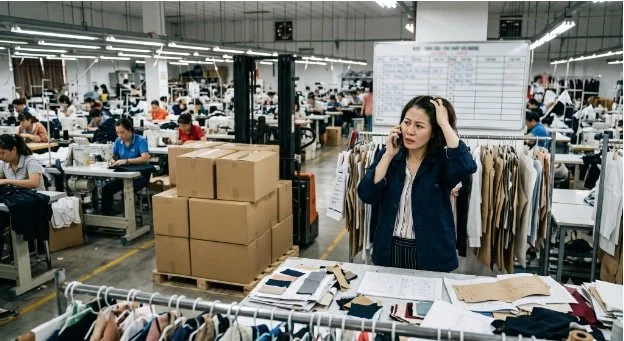
It’s three weeks before your highly anticipated seasonal drop. The campaign photoshoot is done, your marketing emails are scheduled, and your website is primed for pre-orders. Then, you get the email that every fashion founder dreads: your factory missed production deadline targets, and they are pushing your delivery date back by a month.
Panic sets in. You have money tied up in inventory that doesn't exist yet, and you are terrified of losing the trust of your customers.
When you find out a factory missed a production deadline, the natural instinct is to send an angry email demanding they work faster. But throwing a tantrum won't sew the garments any quicker. In this article, we are going to walk through the exact crisis management playbook you need to execute when a deadline is blown, how to salvage your launch, and the hard truth about how to prevent it from happening again.
Step 1: Diagnose Why the Factory Missed Production Deadline (Without Pointing Fingers)
The first rule of production crisis management when a factory misses a production deadline is to drop the emotion. You need facts. Get your factory representative on a call (emails are too slow right now) and find out exactly where the bottleneck is.
The Three Most Common Culprits When a Factory Missed Production Deadline:
Supply Chain Hiccups: The factory might be ready to sew, but the custom dyed-to-match zippers you ordered are stuck at customs, or the fabric mill delivered the rolls two weeks late.
Quality Control Failures: Sometimes, a delay is actually a good thing. If the factory manager noticed a tension issue on the sewing line that ruined 50 units, you want them to stop and fix it, even if it costs you a week.
You Approved Something Late: This is the hard truth many founders don't want to hear. If the factory sent you a pre-production (PP) sample, and you took two weeks to review it and give feedback. The factory didn't delay your order—you did. Your production slot was given to another brand while they waited for your green light.
Step 2: Triage Your Launch Timeline
Once you know the new, realistic delivery date, you must immediately adjust your internal operations. Do not cross your fingers and hope the factory magically finishes early just because the factory missed the production deadline.
Communicate with Wholesale Buyers: If you have wholesale accounts relying on this delivery, tell them immediately. Retailers respect transparency; they despise being ghosted. Give them the updated timeline and explain how you will prioritize their shipment the moment goods arrive.
Adjust Your Marketing Calendar: Adjust your ad spend if necessary and push your launch date back. Do not hype up a product you don't physically have in your warehouse unless you are explicitly running a transparent pre-order campaign.
Update Pre-Order Customers: If customers have already paid, send a sincere update. Explain that to ensure the highest quality, the production process is taking slightly longer than anticipated. Offer a small discount code for their next purchase as an apology.
Step 3: Negotiate a Split Shipment
If the delay is entirely the factory's fault—meaning the factory missed production deadline due to poor internal scheduling—you have leverage to negotiate shipping solutions.
Ask the factory for a split shipment. If you ordered 1,000 units, ask them to finish 200 units immediately and ship them via air freight at their expense so you have enough inventory to fulfill your pre-orders and host your launch. The remaining 800 units can then be shipped via standard sea freight once completed. This is a common compromise that saves your launch without destroying the factory's profit margin entirely.
💡 The Production Buffer Rule: Never schedule a launch date based on a factory's best-case scenario. Always add a 30% time buffer to their estimated delivery date. If they quote a 60-day lead time, plan your marketing launch for 80 days out.
The Hard Truth: How to Prevent a Factory Missed Production Deadline Scenario
If your factory misses a deadline once, it might be bad luck. If they miss deadlines on every single collection, your pre-production process is broken.
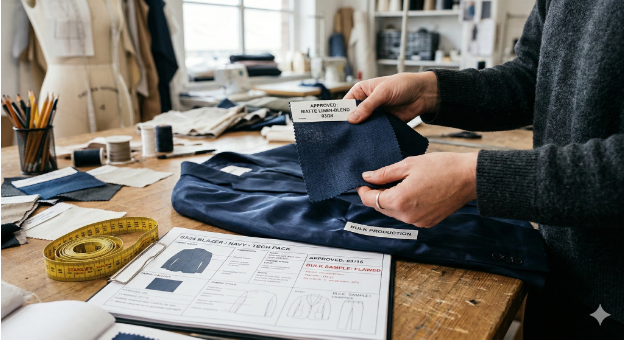
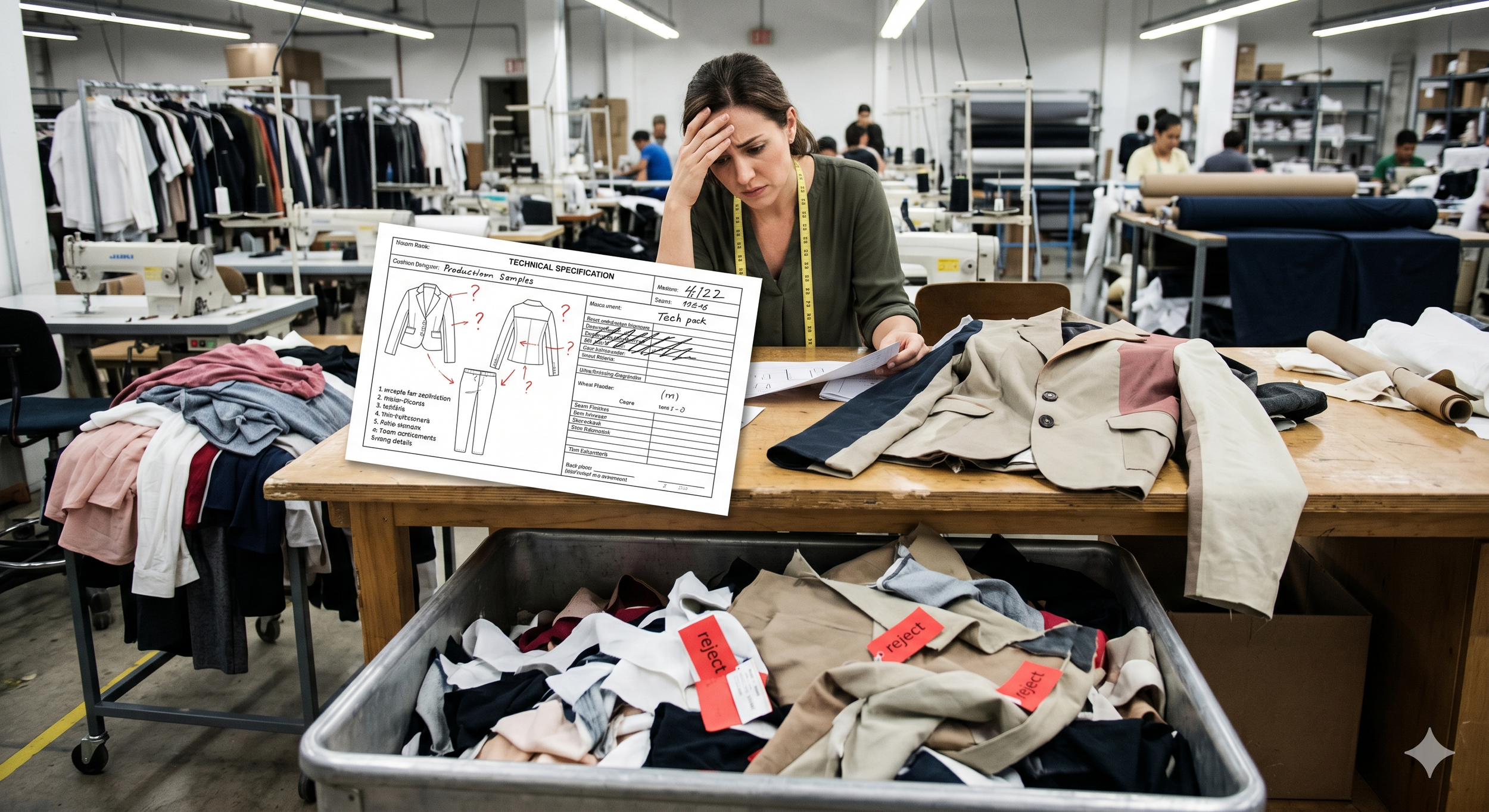
The number one reason bulk production gets delayed is because the development phase dragged on too long. If you spent three months going back and forth on five different sample rounds because your tech packs were incomplete, you ate into your own bulk production time. When you hand a factory a vague blueprint, they have to stop constantly to ask questions, source alternatives, and wait for your approval.
To keep your factory on schedule, you must hand them a production-ready tech pack that answers every single question before they even thread a needle. As well as a fully fleshed-out production calendar that shows all tasks, assignees, and due dates.
Conclusion
Dealing with a factory missed production deadline is a stressful rite of passage for every fashion brand, but it doesn't have to be fatal. By diagnosing the root cause calmly, adjusting your launch timeline, and negotiating smart shipping compromises, you can weather the storm. More importantly, use this crisis as a wake-up call to audit your pre-production processes. Taking control of your technical design is the only way to dictate your own timeline.
Ready to Stop Letting Factory Delays Dictate Your Brand's Growth?
Are vague instructions and endless sample revisions causing your manufacturer to fall behind? Stop playing catch-up with your supply chain. At Tech Packs Co, we build comprehensive, production-ready tech packs that keep your factories on schedule, protect your launch dates, and get your garments made right the first time.
Book a call with our team today to take control of your production timeline.





Author Bio
Tech Packs Co founder Belinda is a technical fashion designer from London, now based in Los Angeles. Belinda had her first job in fashion at the age of 15, fixing swatch cards together. Since then, Belinda has been designing & creating tech packs for more than a decade... for household name brands and independent designers alike.