
Fashion Forward: AI Tools for Growth of Modern Brands
Time to read: 5 minutes
Let’s be honest: if you think AI is just for big fashion houses with seven-figure budgets, you’re behind. AI tools for fashion brands are no longer a “nice to have”—they’re fast becoming must-haves for any brand that wants to stay competitive, scale smart, or simply survive in a crowded market. For many modern labels, AI tools for fashion brands are now part of day-to-day decision-making, not just experimentation.
In this article, I’ll walk you through why AI matters in fashion (beyond the hype) and how you can use these tools in real, actionable ways—whether you’re a startup founder or a scaling D2C label.
Why AI Tools for Fashion Brands Are a Game-Changer
When used correctly, AI tools for fashion brands help teams move faster, make better decisions, and reduce costly mistakes across product development, sourcing, and marketing.
a) Speed & Efficiency
Brands like Zalando are using generative AI to produce marketing imagery in days instead of weeks—slashing cost and lead time.
For you, that means you can test visuals faster, refine collections sooner, and react to trends without overspending.
b) Data-Driven Decisions
AI isn’t magic—it’s pattern recognition at scale. Tools scan massive amounts of data (customer behavior, fabric performance, and trend direction) and surface insights you’d otherwise miss.
Examples include:
high-return fabrics
color patterns trending on social channels
supply-chain bottlenecks
These insights help you make smarter decisions faster.
c) New Value in Your Brand Story
Most brands think of AI only as a cost-cutting tool (faster design, cheaper sampling, fewer mistakes).
But it can also be something your customer values, not just something you use behind the scenes.
When AI improves fit, sizing, sourcing, or availability, it directly improves the customer experience.
That’s when it becomes part of your brand story, not just your internal process.
Where to Use AI: The Best AI Tools for Fashion Brands
Here are four practical areas where AI tools for fashion brands deliver real value—and what to look for when choosing the right platform.
Trend Forecasting & Product Ideation
Tools like T-Fashion scan social media, historical sales, and search data to surface style opportunities you may miss.
How to use it: Set up a monthly “trend check” where you review AI insights and pick 1–2 product ideas to fast-test.
Pro Tip: Use AI input as a prompt, not as the final design.
Fit, Sizing & Virtual Sampling
Size, fit, and sampling cost you time and money. AI + 3D tools now help brands reduce sample rounds using virtual bodies and fit models.
Brands using CLO 3D, Style3D, or Browzwear can validate fit and construction digitally before cutting fabric, reducing sample rounds and development costs.
Platforms like Bold Metrics and True Fit use customer body data to refine size charts and reduce costly fit-related revisions.
Digital avatars from Alvanon or TG3D allow brands to test garments across multiple body types before producing samples.
How to use these:
Integrate virtual fit tools early in the development process, run a virtual check on fit using scanned fabrics, then check fit across size ranges.
Warning: Virtual ≠ no fit review. Always test on real models afterward.
Sourcing & Procurement Automation
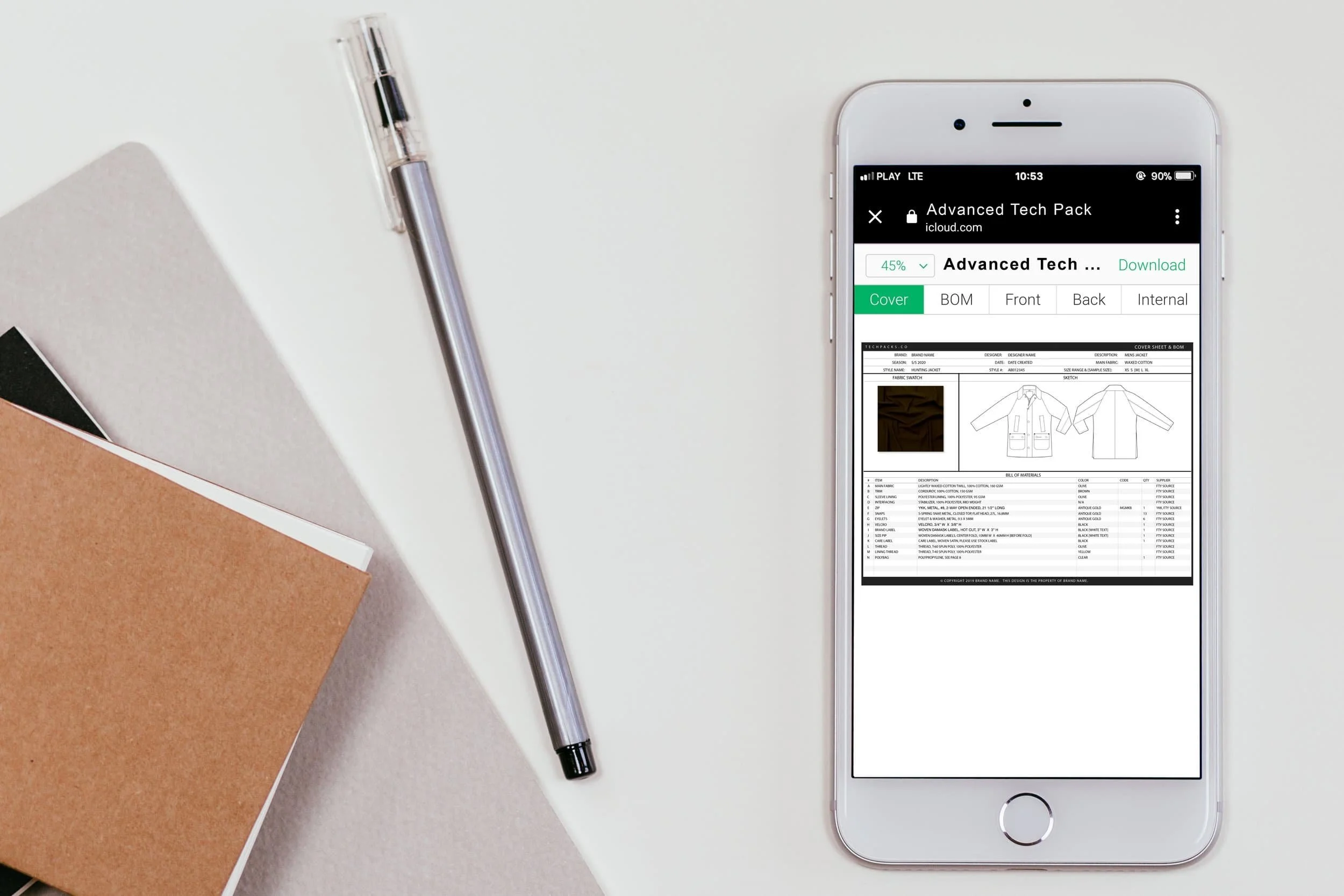
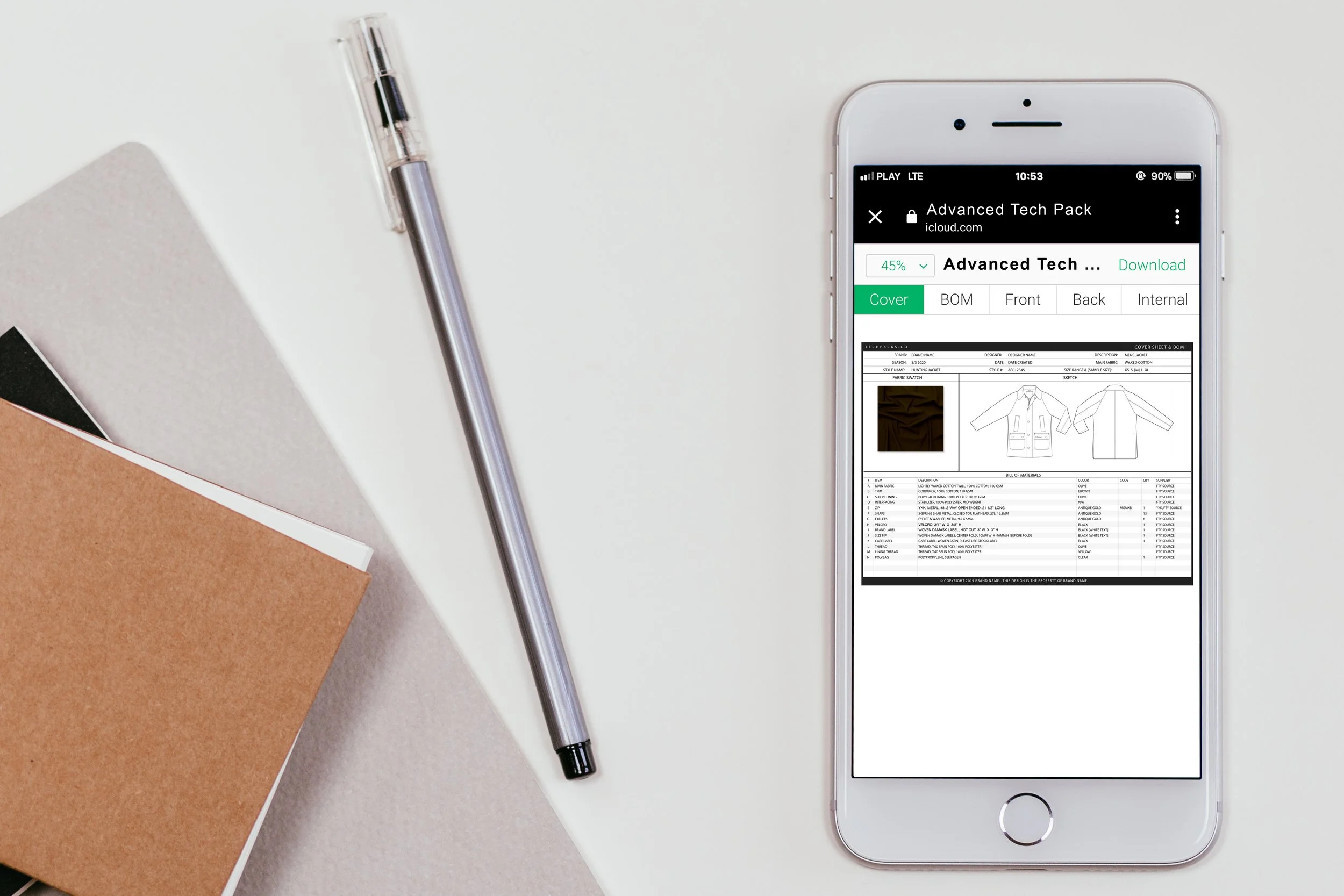
AI doesn’t replace good product development; it amplifies it. When your tech packs are clear and you have a streamlined supply chain, AI-powered PLM and sourcing tools can help track orders, monitor factory capacity, flag delays or quality risks, and automate RFQs across suppliers. The result is fewer surprises, faster decisions, and better visibility across your supply chain. At Tech Packs Co, we see AI work best after strong technical foundations are in place, not instead of them.
How to use this:
Use AI dashboards to monitor:
lead times
quality incidents
material shortages
Shipping delays
Set alerts to act early. Use the data you collect to negotiate better terms and plan better for the next quarter.
Marketing & Customer Experience
AI tools help fashion brands personalize shopping journeys, reduce returns, and improve retention through smarter size guidance, product recommendations, and post-purchase support.
Platforms like Nosto and Dynamic Yield personalize product discovery. Used correctly, these tools don’t replace good product development; they work best when paired with clear tech packs, consistent fit standards, and well-structured product data.
How to use this:
Deploy tools like
size assistants
virtual try-ons
recommendation engines
AI chatbots
What “Good AI” vs “Bad AI” Actually Means for Fashion Brands
Not all AI tools for fashion brands deliver the same results—the difference often comes down to data quality, implementation, and how closely the tools align with your product foundations.
Good AI → better experience. Bad AI → more returns and frustration.
The difference isn’t whether you use AI; it’s how you use it and whether your data and product foundations are solid.
1. Size & Fit Tools
Good AI:
Uses real garment measurements from accurate tech packs
Accounts for fabric stretch, construction, and fit intent
Learns from actual return and fit feedback
Result: Customers get better size recommendations, feel confident purchasing, and return less.
Bad AI:
Relies on generic size charts or incomplete measurements
Ignores fabric behavior or grading logic
Makes confident but inaccurate recommendations
Result: Customers order the “recommended” size, it fits poorly, and trust is lost.
2. Virtual Try-On & 3D Visualization
Good AI:
Uses production-ready patterns and measurements
Shows realistic drape, proportion, and length
Helps customers understand fit before buying
Result: Fewer surprises when the product arrives.
Bad AI:
Uses rough design sketches or inaccurate avatars
Shows idealized or distorted proportions
Overpromises what the garment will actually look like
Result: Customer expectations don’t match reality → returns increase.
3. Personalization & Product Recommendations
Good AI:
Learns from purchase history, returns, and browsing behavior
Recommends styles and fits that actually suit the customer
Adjusts based on what customers keep vs return
Result: Higher conversion, stronger retention, better lifetime value.
Bad AI:
Pushes products based on popularity, not suitability
Ignores fit feedback and return reasons
Prioritizes upsells over accuracy
Result: Short-term sales, long-term dissatisfaction.
4. Post-Purchase & Returns Optimization
Good AI:
Analyzes return reasons to improve product design and fit
Flags recurring fit or quality issues early
Feeds insights back into product development
Result: Fewer repeat mistakes, better next collections.
Bad AI:
Automates returns without learning from them
Treats returns as logistics, not feedback
Never improves the underlying product
Result: The same problems repeat every season.
The Real Insight for Founders
AI amplifies whatever foundation you already have.
If your tech packs, measurements, and fit logic are clear, AI improves the customer experience. If they’re vague or inconsistent, AI simply scales the problem faster.
How to Choose & Implement the Right AI Tools
Define Your Priority Problem
Don’t adopt AI because it sounds cool. Identify your top 1–2 pain points first.
Check Data, Integration & Cost
AI needs:
Clean, structured data
integration with your PLM/ERP
realistic cost expectations (subscription + onboarding + training)
Run a Pilot & Measure
Start small with a pilot (fixed period, fixed goals). Examples:
reduce sample rounds by 20% for F/W denim
cut returns by 5%
Shorten new supplier onboarding time by 50%.
Conclusion
AI tools for fashion brands are not the “future”; they’re already shaping how modern brands design, source, and sell today.
Want help picking the right AI tool or implementing it without disrupting your team? At Tech Packs Co, we help founders evaluate, pilot, and embed AI tools across product development, sourcing, and customer experience.
Book a consultation today and start using AI the smart way.




Author Bio
Tech Packs Co founder Belinda is a technical fashion designer from London, now based in Los Angeles. Belinda had her first job in fashion at the age of 15, fixing swatch cards together. Since then, Belinda has been designing & creating tech packs for more than a decade... for household name brands and independent designers alike.