
FOB vs DDP for Fashion Brands: A Practical Shipping Guide
Time to read: 6 minutes
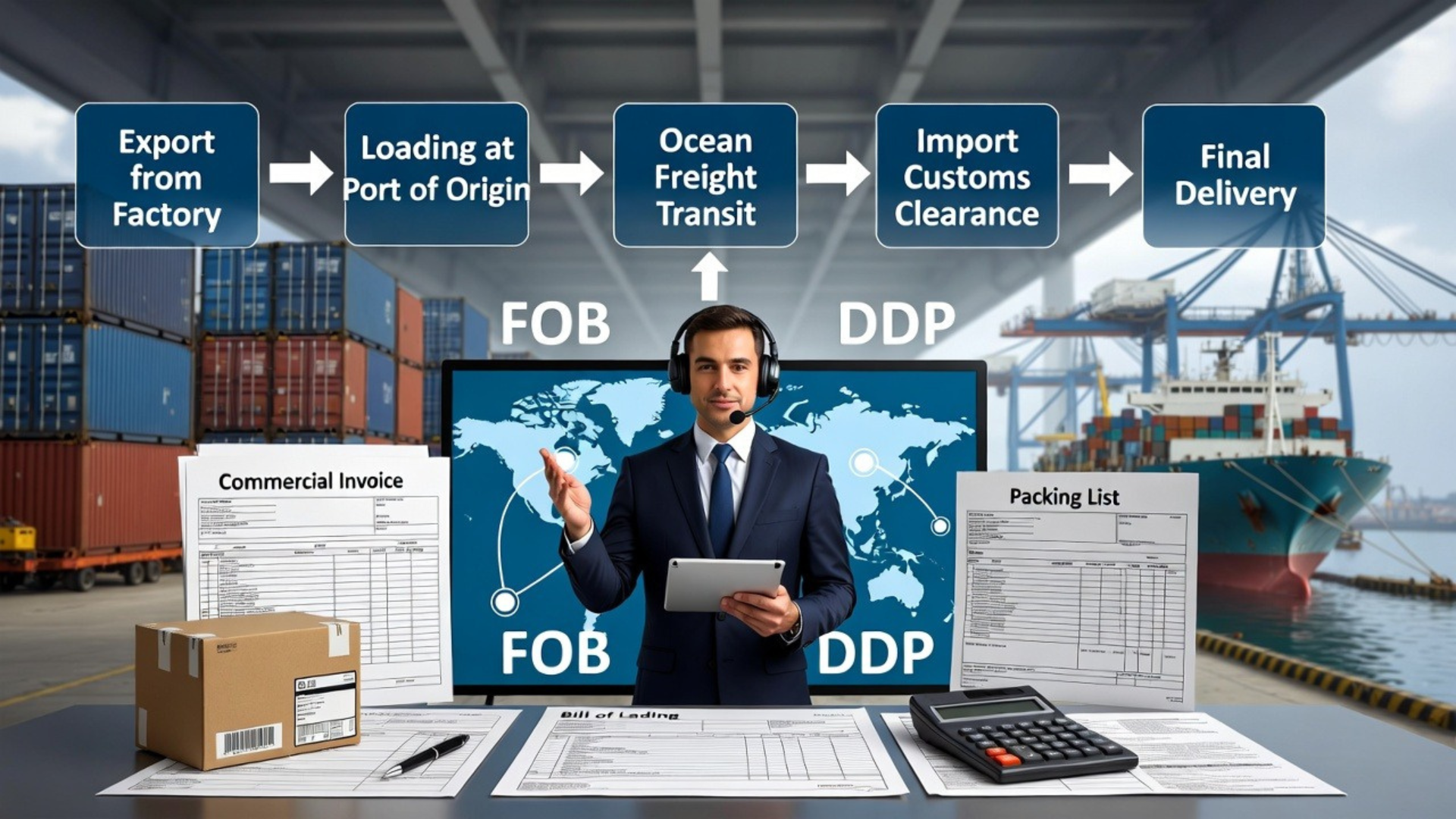
International shipping can make or break a fashion brand’s margins, timelines, and customer experience. Understanding FOB vs. DDP and the Incoterms in between helps brands choose the right balance between cost control and operational simplicity.
How International Shipping Works (Quick Overview)
Before diving into Incoterms, here’s the typical shipping flow from factory to final destination:
Transport to the export port
Unloading at the export port
Loading onto the vessel
Export customs clearance
Ocean freight transit
Unloading at the import port
Import customs clearance
Import duties and taxes
Loading for inland transport
Unloading at the final destination (often a 3PL warehouse for e-commerce brands)
Where responsibility shifts along these steps depends entirely on the Incoterm you choose.
Understanding Incoterms for Fashion Brands
Incoterms define who pays, who insures, and who takes the risk at each stage of shipping.
EXW (Ex Works): Best for experienced brands only. You take full responsibility from the factory door, including export clearance, freight, and insurance.
FCA (Free Carrier): The supplier clears goods for export and hands them over at an agreed location. Often confused with FOB, clarify this carefully with suppliers.
FAS (Free Alongside Ship): Goods are delivered next to the vessel at the export port. You handle loading and everything after.
FOB (Free On Board): A popular option for fashion brands. The supplier handles everything until goods are loaded onto the vessel. Risk transfers once onboard.
Best for: Brands that want freight control without handling factory-level logistics.
CFR & CIF: Cost Included, Risk Is Not
CFR (Cost and Freight): The supplier pays freight to the destination port, but risk transfers once goods are loaded.
CIF (Cost, Insurance, and Freight): Same as CFR, but insurance is included.
Watch out: Insurance coverage under CIF is often minimal.
CPT & CIP: Multimodal-Friendly Options
CPT (Carriage Paid To): The seller pays freight to an agreed destination, but risk transfers early.
CIP (Carriage and Insurance Paid To): Includes insurance during transit.
These work well for air freight or mixed transport routes.
DAP, DPU, and DDP: Delivered Options
DAP (Delivered at Place): Seller delivers to a named location. You handle import duties and unloading.
DPU (Delivered at Place Unloaded): Seller delivers and unloads goods. You handle import customs and duties.
DDP (Delivered Duty Paid): The seller handles everything, including duties and taxes. You just unload.
Best for: Small teams or brands prioritizing simplicity over cost control.
FOB vs. DDP: Which Should Fashion Brands Choose?
Factor FOB DDP
Cost Control High Low
Operational Simplicity Medium Very High
Risk Transparency High Medium
Best For Scaling brands Lean teams/first imports
Key Shipping Documents You’ll Encounter
Depending on your Incoterm, you may need the following:
Commercial Invoice
Bill of Lading
Packing List
Certificate of Origin
Insurance Certificate
Customs Declarations
Import/Export Licenses
Inspection & Compliance Certificates
Having these prepared early prevents delays and surprise fees.
Why Freight Forwarders Matter
Freight forwarders act as your logistics partner, handling:
Booking and route optimization
Documentation and customs clearance
Cargo consolidation
Insurance and risk management
Issue resolution and claims
What to look for in a forwarder:
Clear communication
Proactive problem-solving
Strong documentation process
Flexible shipping options (cost vs speed)
Popular platforms:
Freightos
Flexport
FreightHub
iContainers
Conclusion
International shipping doesn’t have to feel overwhelming, but it does require clarity. Understanding Incoterms—especially the difference between FOB and DDP—gives fashion brands the power to control costs, reduce risk, and avoid costly surprises as they scale. The right shipping term depends on your team size, experience level, and how much control you want over logistics.
For growing fashion brands, FOB often strikes the best balance between cost efficiency and operational control. Meanwhile, DDP can be a smart short-term solution for lean teams that value simplicity and speed. No matter which route you choose, working with a reliable freight forwarder and having your documentation in order will make the entire process smoother and more predictable.
Ultimately, shipping is not just a backend operation—it’s a strategic decision that directly impacts margins, timelines, and customer satisfaction. The more informed you are, the better positioned your brand will be to grow confidently in a global market.
Need help modeling shipping costs or choosing the right Incoterms for your brand? Tech Packs Co works with fashion founders to align logistics, pricing, and production strategy. Book a consultation to get clarity before you ship.






Author Bio
Tech Packs Co founder Belinda is a technical fashion designer from London, now based in Los Angeles. Belinda had her first job in fashion at the age of 15, fixing swatch cards together. Since then, Belinda has been designing & creating tech packs for more than a decade... for household name brands and independent designers alike.